
Indiana Family Court Records
Indiana family court records cover divorce, child custody, child support, paternity, adoption, and protection orders filed in court. These records are kept by circuit and superior courts in all 92 Indiana counties and maintained by county circuit clerks. You can search many family court records online through MyCase.in.gov, the official public case search portal run by the Indiana Office of Judicial Administration. Some records require an in-person visit or a formal written request to the county clerk's office. This page explains how to find and access Indiana family court records.
Indiana Family Court Records Quick Facts
Search Indiana Family Court Records Online
The main tool for searching Indiana family court records online is MyCase.in.gov. This portal is free to use and open to everyone. You can look up cases by party name, case number, citation number, or attorney name. The system covers all 92 Indiana counties and returns results showing party names, case types, filing dates, hearing dates, and linked documents. Many documents are available to view and download at no cost. It is the fastest way to start a family court record search in Indiana.
MyCase includes divorce and dissolution filings (DR case type), paternity cases (JP), and child support cases (CS). Custody orders appear within dissolution and paternity case files. The portal has a "sounds-like" search feature for name variations, which helps when you are unsure of exact spelling. You can also filter by county and by case status. Search results are capped at 1,000 entries, so filtering by county or date range helps narrow things down when a name is common.
Some records are not in MyCase. Divorce decrees and marriage licenses are not available online under Indiana policy. Adoption records are sealed by law and do not appear in public searches. Juvenile records are confidential and are excluded from the portal. Protection order cases are also excluded under federal law, since identifying information about protected persons cannot be publicly disclosed. For any of these, you must contact the clerk's office directly.
The Indiana Judicial Branch Public Records Portal links all court search tools in one place, explains which record types are online, and provides direct guidance on what to do when a document is not yet digitized.
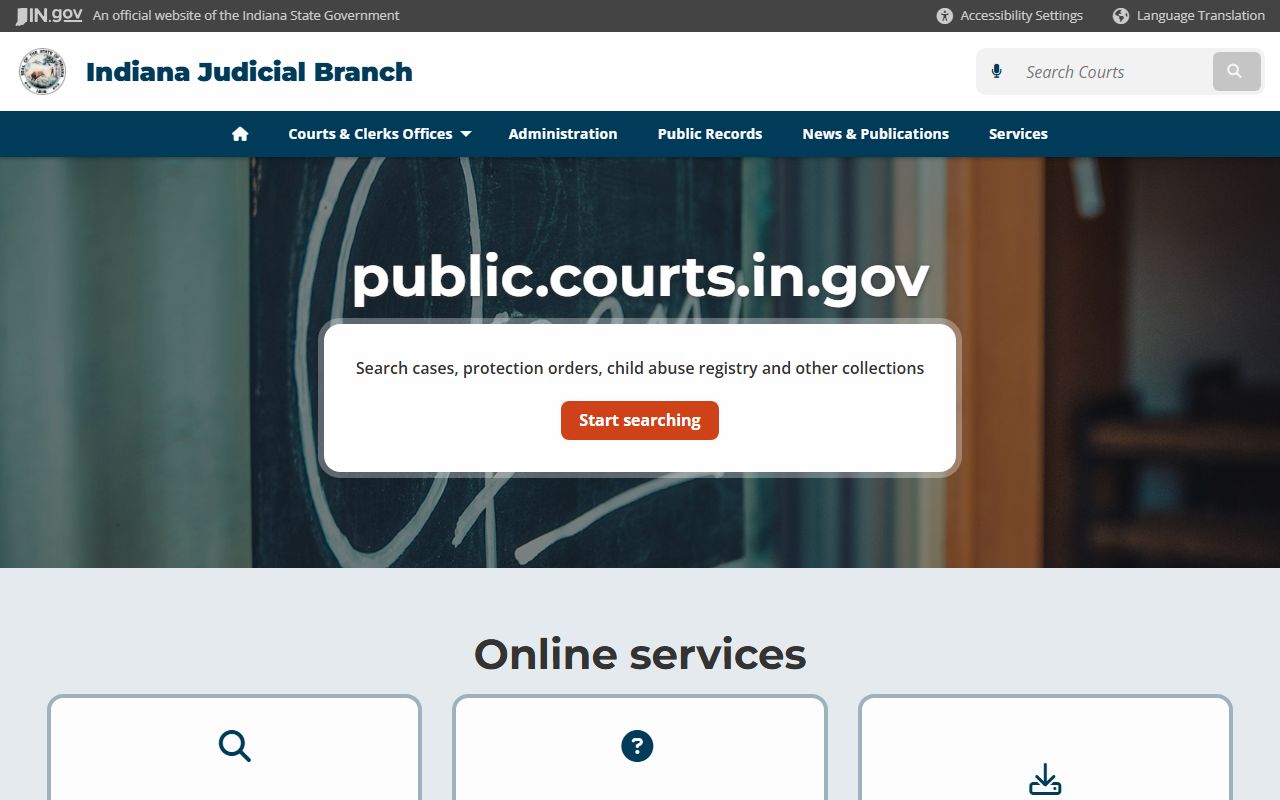
The portal also notes: "Whether you're looking for your own records, records for family members, bulk data or making a public information request, the information below should point you in the right direction."
The MyCase public access portal lets you run name searches, case number searches, and attorney searches across the entire Indiana court system. Advanced search options let you set file date ranges and case status filters. Using these filters is the best approach when searching for a common name or when you want results from a specific time period.
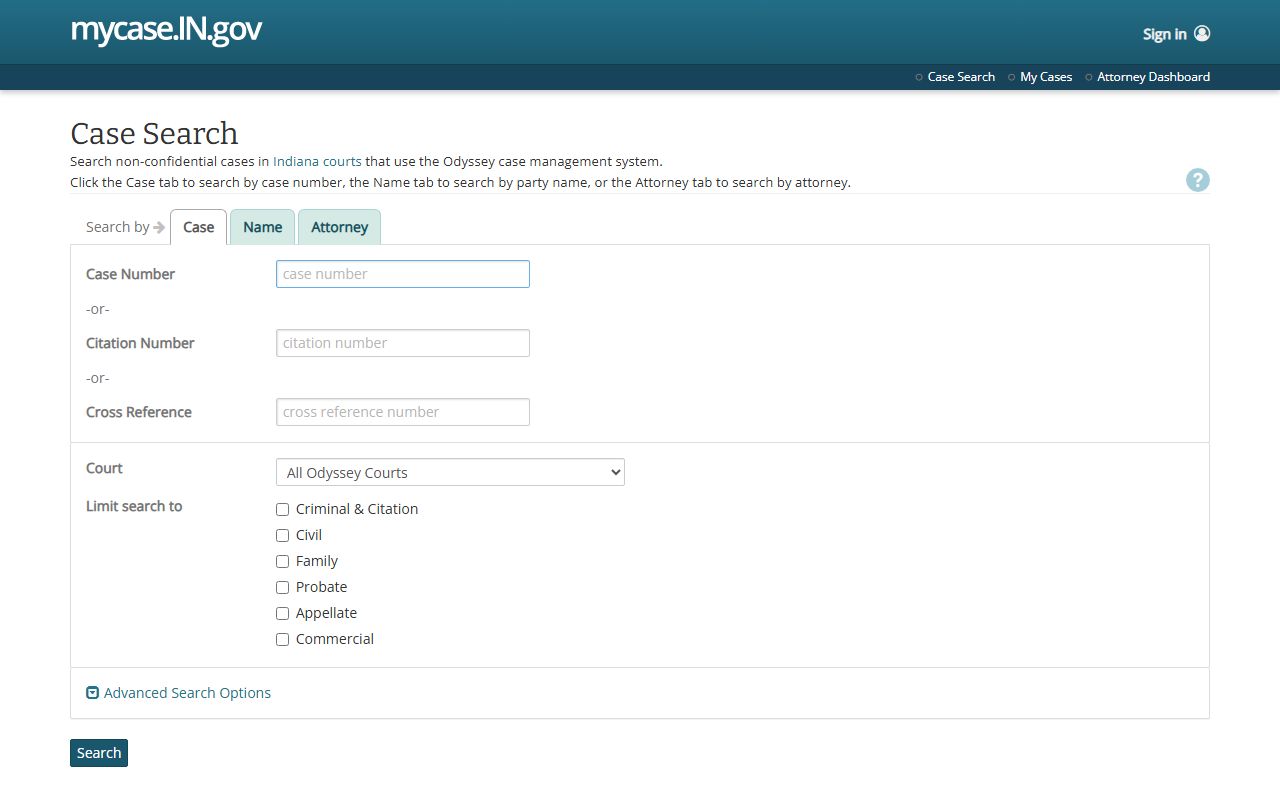
Note: MyCase displays public information only and is not an official court record. For certified copies or any legally binding purpose, contact the circuit clerk in the county where the case was filed.
How to Get Family Court Records in Indiana
There are three main ways to get Indiana family court records: online through MyCase, in person at a county clerk office, or by mail. The right method depends on what you need and how fast you need it.
Online access through mycase.in.gov is free and available any time. It works well for basic case lookups and viewing filed documents. It does not produce certified copies, and it does not cover all record types. Use it as a first step to find case numbers and key dates before making a formal request.
In-person visits to a county clerk's office give you full access to case files and the ability to get certified copies the same day. Go to the clerk in the county where the case was filed. Most offices are open Monday through Friday from 8:00 a.m. to 4:00 p.m. Bring the names of both parties or the case number if you have it. Copy fees are typically $1 per page for plain copies. Certified copies cost an extra $3 per document. Most offices accept cash, money order, or cashier's check. Personal checks are not accepted, though some locations take credit or debit cards with a convenience fee.
The Indiana courts records request page walks through the formal process for obtaining records that are not online, including how to identify the right clerk's office and what information to include in your request.
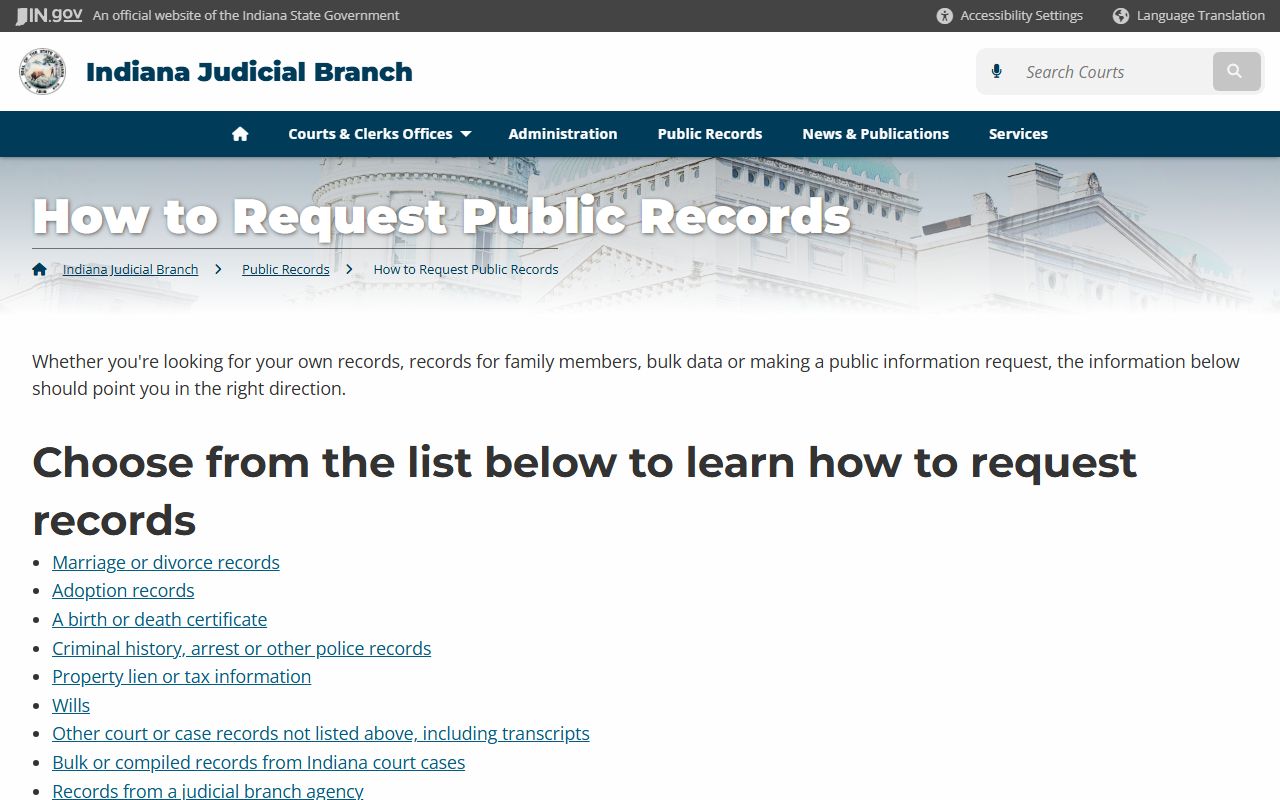
For mail requests, contact the clerk's office ahead of time to confirm they accept mail orders and to get the correct mailing address and payment instructions. Include the full names of both parties, the approximate filing date, and the case number if you have it. The Indiana State Library and Indiana Supreme Court Law Library can also help locate records, especially for older or historical cases.
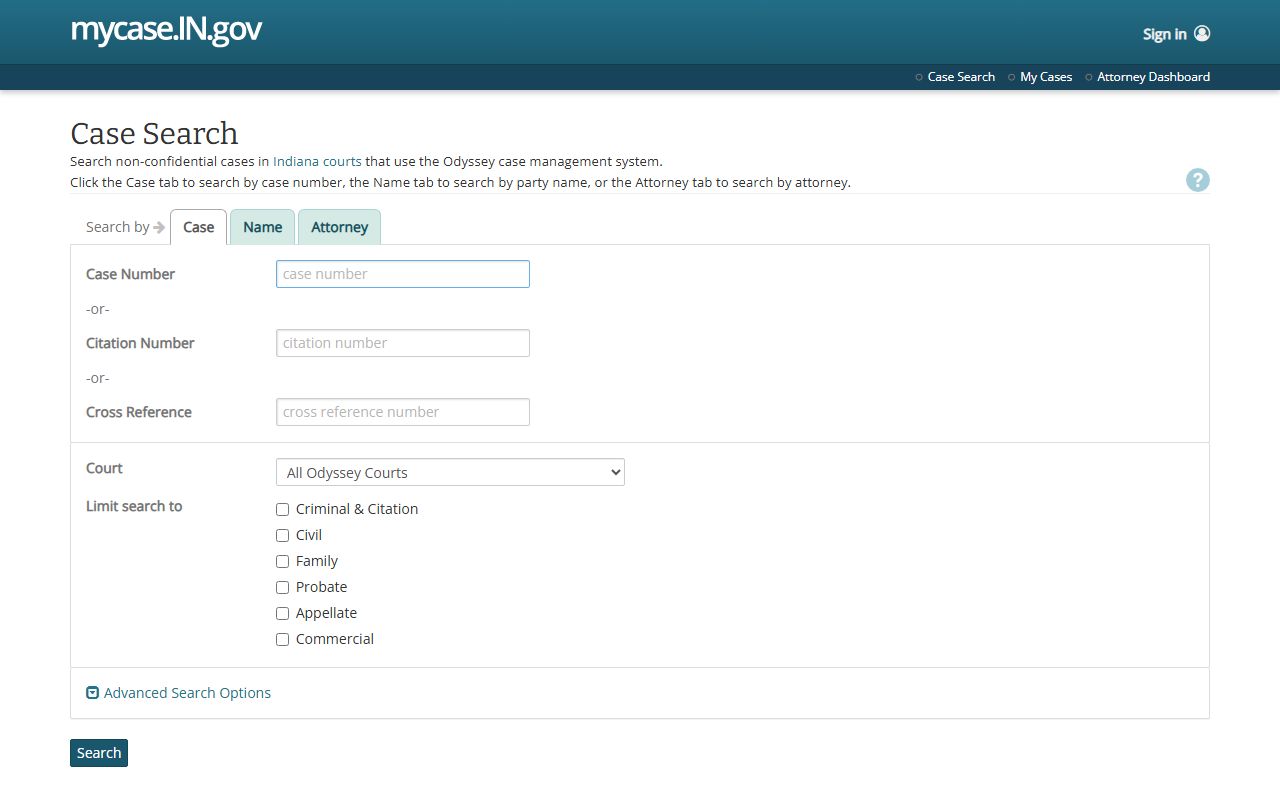
The MyCase portal notes clearly that official records may only be obtained directly from the court maintaining them, and that information displayed on the site may contain errors or omissions.
Types of Indiana Family Court Records
Indiana family court records cover several distinct case types. Each has its own set of rules and its own section of Indiana Code Title 31. Knowing what type of record you need will help you find it faster and request it from the right place.
Divorce and dissolution of marriage cases are governed by IC 31-15. These cases end a marriage and typically cover property division, spousal maintenance, and the allocation of debts. The circuit clerk in the county where the case was heard holds all related records. The case file usually includes the petition, the response, the settlement agreement, and the final decree signed by the judge. Divorce decrees are not available online and must be requested directly from the clerk's office in the county where the case was filed.
Child custody and parenting time orders fall under IC 31-17. These orders set where a child lives, how decisions about the child are made, and how time with each parent is divided. Indiana's Parenting Time Guidelines note that parenting time is a child's right, not the parent's right. Modifications to custody orders require a new motion in the same court. Custody records are part of the dissolution or paternity case file at the county clerk's office.
Child support orders are set and enforced under IC 31-16, which uses the Income Shares Model. Support records are part of the family court case file and can also be accessed through the county prosecutor's child support office. Paternity cases, which establish legal fatherhood, are governed by IC 31-14 and may involve voluntary affidavits or genetic testing. Adoption records are sealed under IC 31-19 and are not available to the general public.
The main types of Indiana family court records include:
- Divorce and dissolution of marriage filings (DR case type in MyCase)
- Child custody and parenting time orders
- Child support establishment and modification cases
- Paternity cases (JP case type in MyCase)
- Protection orders (excluded from public MyCase search by federal law)
- Guardianship petitions and letters of guardianship
- Adoption records (sealed, not publicly available)
Expunged cases are removed from public access on MyCase. If you cannot find a case you believe exists, it may have been expunged or sealed by court order. Contact the circuit clerk in the relevant county to ask about records that do not appear in the public search.
Indiana Child Support Records and Parenting Time
The Indiana Child Support Bureau (ICSB) administers the federal Title IV-D child support program across the state. Each of Indiana's 92 counties has a designated Title IV-D child support prosecutor who handles local enforcement and establishment work. Services include locating non-custodial parents, establishing paternity, setting child support orders, enforcing existing orders, and collecting and distributing payments. You do not need to hire a private attorney to use these services through the prosecutor's office.
Indiana's child support formula uses the Income Shares Model. The premise is that children should receive the same share of their parents' combined income that they would have gotten if the family stayed together. The court calculates each parent's contribution based on gross income, work-related childcare costs, health insurance premiums, and any extraordinary educational or medical expenses. Either parent can ask for a modification review if circumstances change significantly. Records of support orders and payment history are part of the case file at the county clerk's office.
The Indiana Child Support Hotline at 800-840-8757 gives automated payment information around the clock. Customer service is available Monday through Friday from 7:00 a.m. to 6:00 p.m. EST.
The Indiana Department of Child Services child support page explains how the state's child support program works, outlines the services available through each county's prosecutor office, and provides access to payment information and enforcement resources for Indiana family court cases.
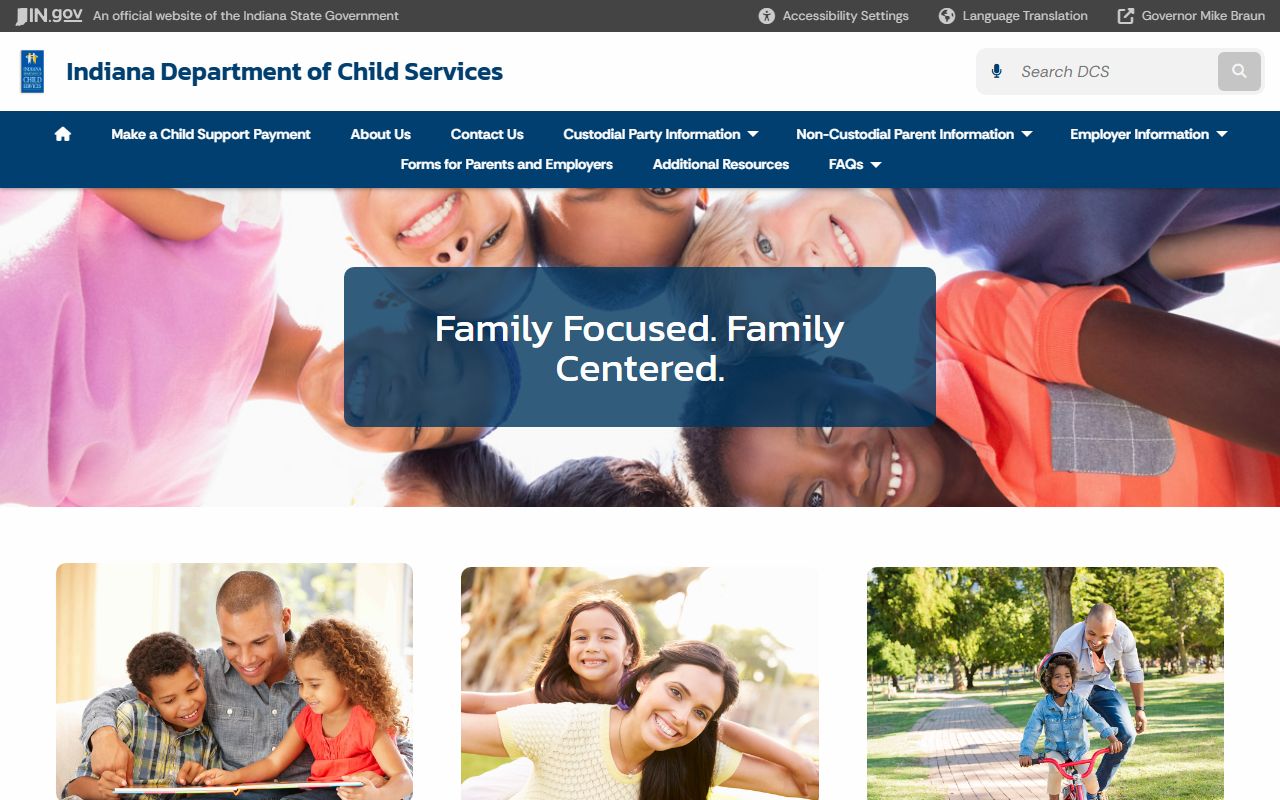
The Child Support Bureau handles collection and disbursement of child support payments statewide and maintains records of all support orders tied to Indiana family court cases.
For parents dealing with parenting time disputes, the Indiana Parenting Time Helpline is a free phone service staffed by licensed attorneys. Reach them at 844-836-0003 from noon to 5:00 p.m. EST Monday through Friday. The helpline provides legal education about how Indiana's Parenting Time Guidelines apply to your case, written information on visitation rights, and referrals to other agencies. They cannot give legal advice or represent you in court, but the guidance often helps people understand their next steps.
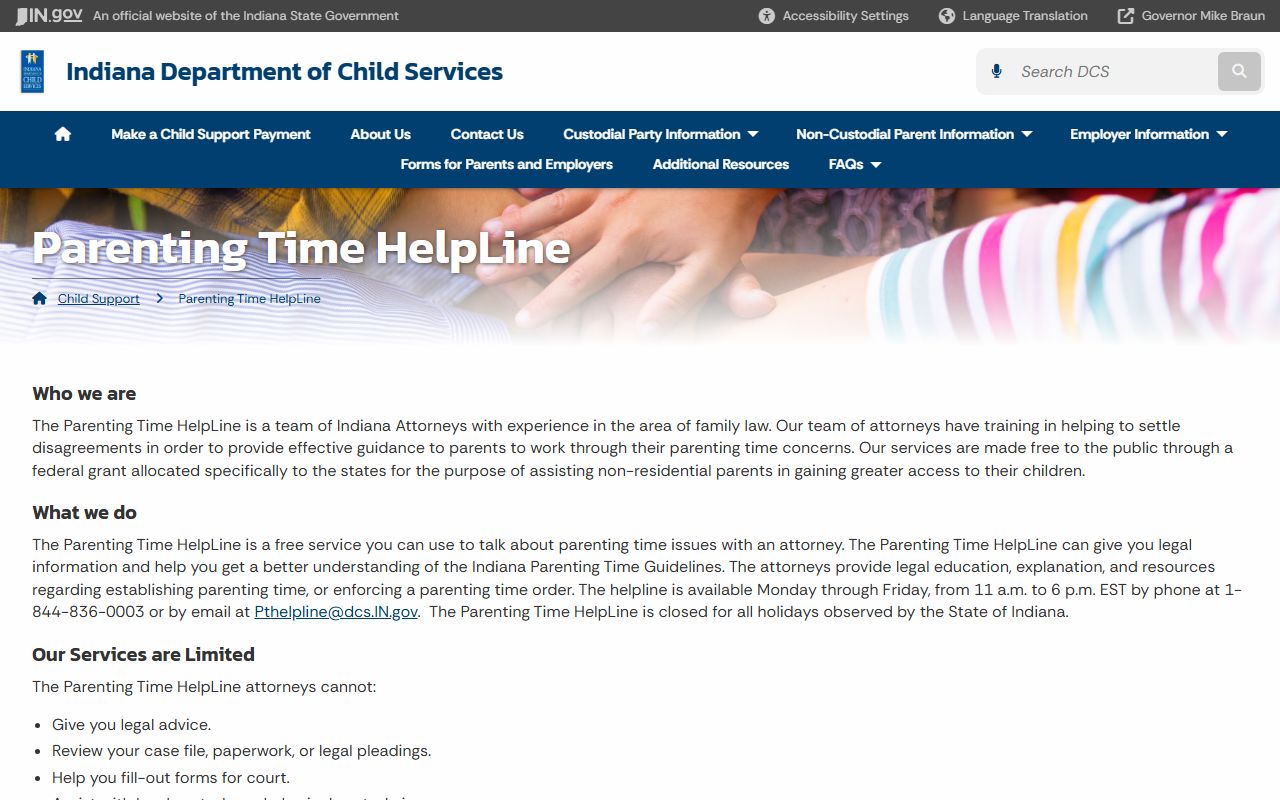
Note: The Parenting Time Helpline provides legal education only, not legal advice. For advice specific to your case, consult a licensed Indiana family law attorney.
Indiana Family Court Self-Service Resources
The Indiana Self-Service Legal Center is an official state resource for people who handle their own family court cases. The site was created to provide information, forms, and tools for self-represented litigants across Indiana. It covers divorce, custody, child support, paternity, and related topics. The center notes clearly: "Self-representation should not be taken lightly, and there are many instances in which hiring an attorney is a good idea." With that said, the resources here give genuine help to people who choose to navigate the process on their own.
One key tool on the site links to IN.freelegalanswers.org, where eligible users can post a legal question and get a free, confidential response from a licensed Indiana attorney. This is not the same as having a lawyer represent you, but it can help you understand what your case involves before you file anything or respond to a filing. Court staff cannot give legal advice, so this service fills an important gap for many people handling Indiana family court matters on their own.
The Indiana Self-Service Legal Center provides access to court forms, step-by-step guides, and links to free legal resources for anyone dealing with a family court case in Indiana.
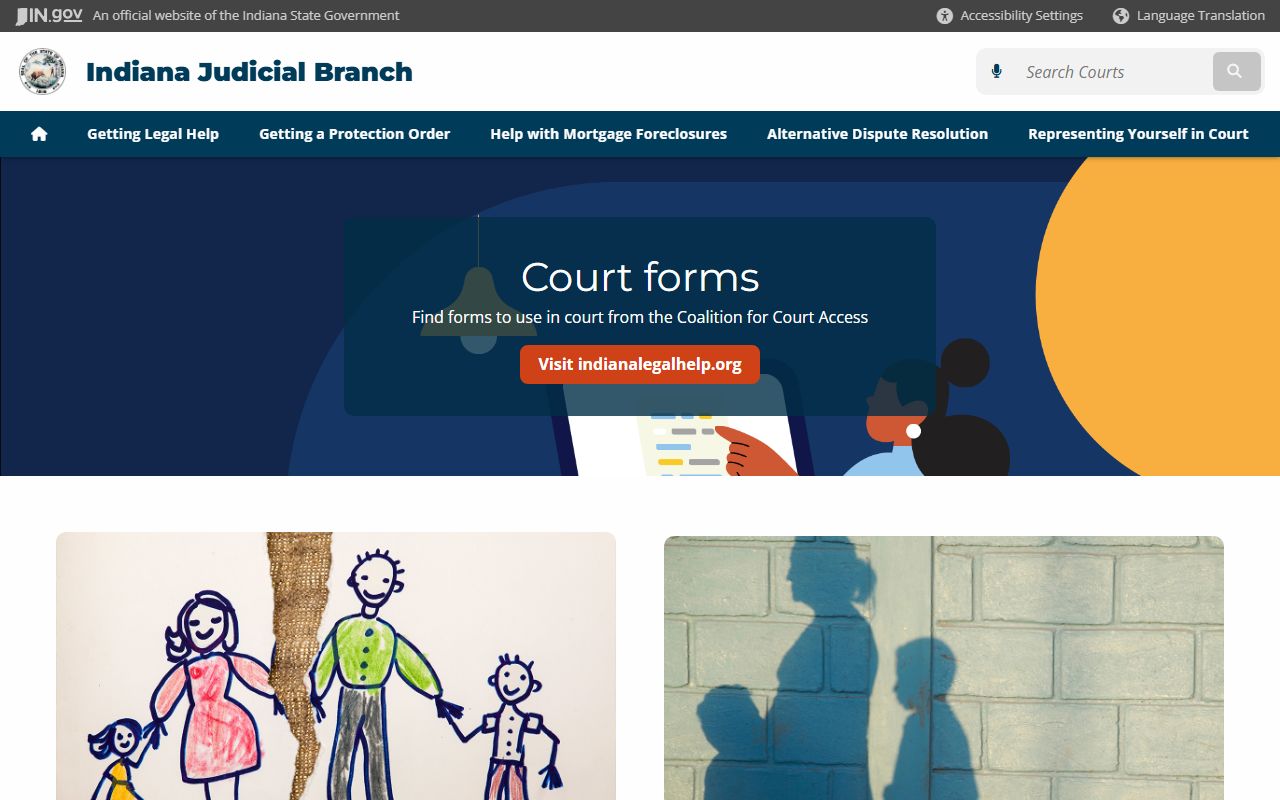
This is a practical starting point for any pro se litigant dealing with a family court matter in Indiana.
The Indiana Self-Service Legal Center family resources page lists key contacts for people dealing with family law issues. Resources listed include Indiana Legal Services, the Indiana State Bar Association, the Indiana Code Title 31 statutes, and the Parenting Time Guidelines. Phone contacts include the Parenting Time Helpline at 844-836-0003, the Indiana Coalition Against Domestic Violence at 800-332-7385, and the Indiana Child Abuse Hotline at 800-800-5556. Having these in one place saves time when you are dealing with an active family court case in Indiana.
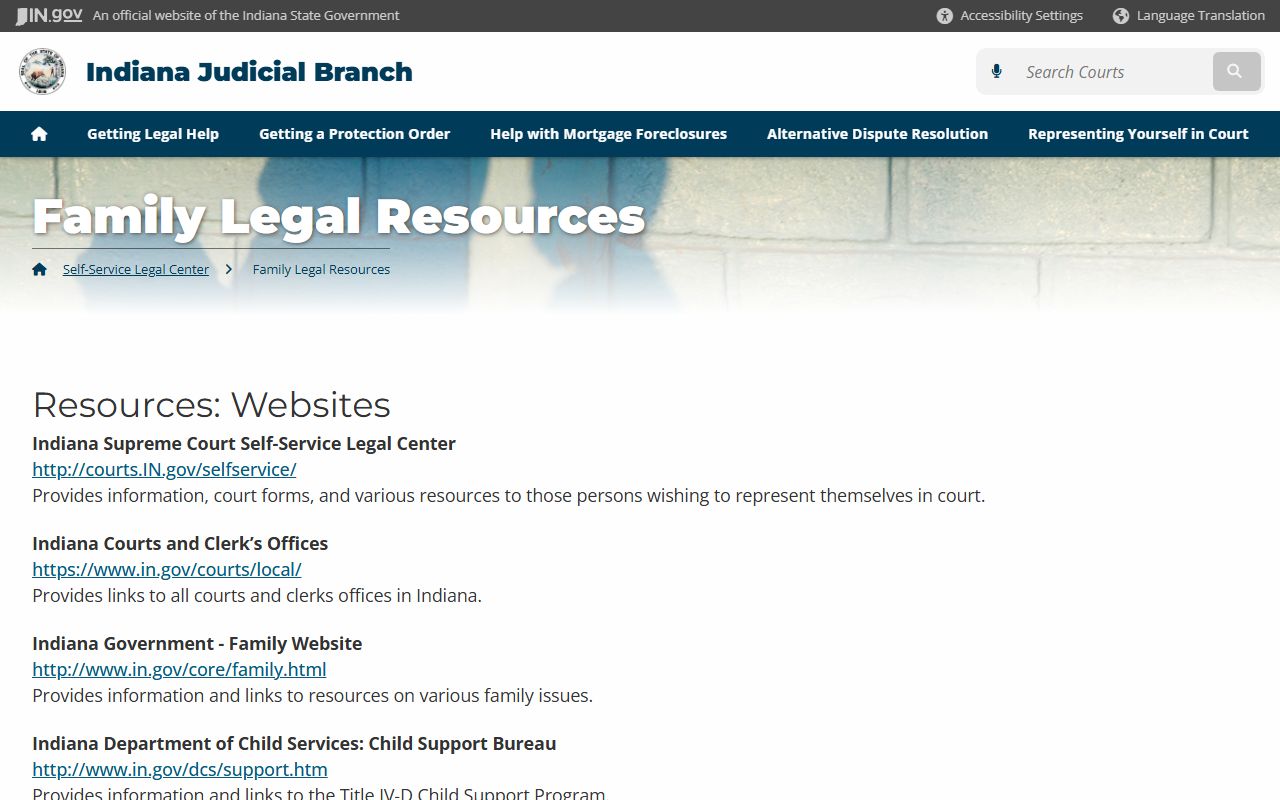
This resource page is worth saving if you are handling a family court case without an attorney anywhere in Indiana.
Indiana Trial Courts and County Clerks
Indiana has 92 counties, each with its own circuit and superior court system that handles all family law cases. The circuit clerk in each county is the official keeper of all family court records. Clerk offices file and store case documents, process marriage licenses, collect and disburse child support payments, issue summonses, and prepare certified copies of court orders. Every Indiana family court record starts and ends at a county clerk's office.
The Indiana Trial Courts and Clerks directory lists all 92 counties with links to local court rules, contact information, e-filing details, and individual court resources. If you do not know which county holds your family court records, start here. Family cases are filed in the county where one of the parties lived at the time of filing. The county of residence when the case was first filed is almost always the right place to contact for records.
Most clerk offices are open Monday through Friday from 8:00 a.m. to 4:00 p.m. Hours can vary by county, so calling ahead is always a good idea. The directory lists phone numbers and addresses for all 92 Indiana counties.
The Indiana courts local directory gives you a direct path to the right county court for any family court record search in Indiana, with links to local rules and contact details for every circuit and superior court in the state.
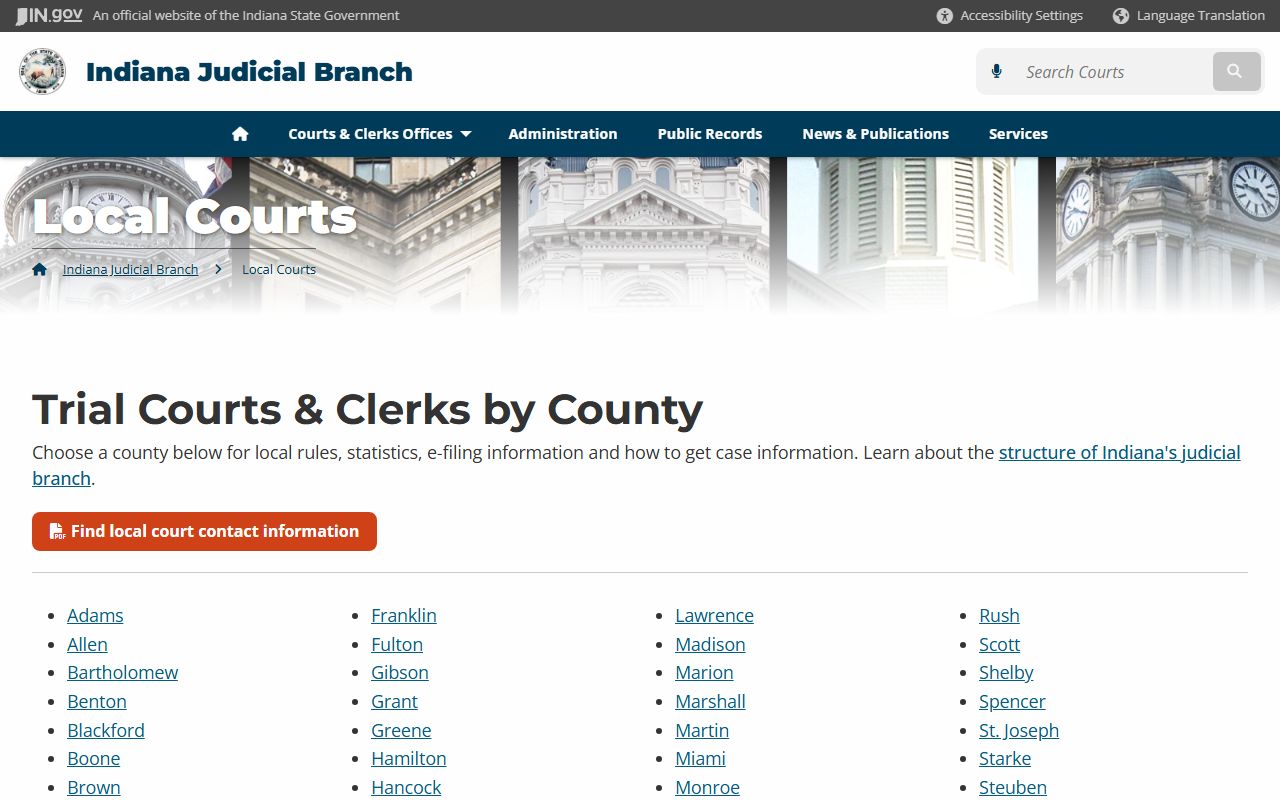
Use the directory to identify the right county clerk, confirm hours, and find out exactly what you need to bring or submit to obtain family court records in Indiana.
Legal Help for Indiana Family Court Cases
Indiana Legal Services provides free civil legal help to low-income residents statewide. Family law is one of their primary focus areas. Services include help with divorce, custody, child support, paternity, and protection orders. If you meet income guidelines, they may take your case directly or connect you with other free resources in your area.
The Indiana State Bar Association operates a lawyer referral service for people who need a private family law attorney. The bar can connect you with a licensed attorney in your county. Initial consultations are typically available at a reduced rate. The ISBA also publishes public legal information on family law topics to help Indiana residents understand their rights and options.
Free legal answers are available at IN.freelegalanswers.org for eligible Indiana residents. Licensed attorneys respond to questions posted through the platform at no cost. The service is private and confidential. It is a solid option for understanding what a court document means or what your options are before you take your next step in a family court case.
Browse Indiana Family Court Records by County
Each of Indiana's 92 counties has its own circuit clerk who keeps family court records. Pick a county below to find local clerk contact information and resources for family court records in that area.
Family Court Records in Major Indiana Cities
Residents of Indiana's major cities file family court cases at their county's circuit or superior court. Pick a city below to find local resources for family court records in your area.